
Empower Your Life & Relationships by Setting Boundaries

In today's world, the distinction between work and personal life is often ambiguous. Because of this ambiguity, establishing healthy boundaries is an essential skill for developing oneself and fostering relationships. But what if we showed that establishing boundaries goes beyond simply saying "no"? It's about building relationships, empowering oneself, and living the life you've always desired. Are you interested?
Key Takeaways
- Healthy boundaries are essential for physical, emotional, and mental well-being.
- Setting boundaries can lead to increased self-respect, confidence, and work-life balance.
- Establishing boundaries helps prevent burnout, resentment, and feeling overwhelmed.
- Communicating boundaries effectively strengthens relationships and fosters deeper connections.
- Learning to say "no" without guilt or apology is a crucial skill for boundary-setting.
The Importance of Healthy Boundaries
Setting healthy boundaries is essential for our self-worth, self-respect, and overall emotional well-being. These boundaries mark the line between our personal space and others', giving us control over our lives. They shield our physical, mental, and emotional health from harm. Without them, we risk getting too close to others, neglecting our own needs, or isolating ourselves.
Defining Boundaries and Why They Matter
Boundaries ask the fundamental question, "Where do I end and where do you begin?" They are influenced by our early attachment experiences and deeply affect our relationships. By setting healthy boundaries, we can express our needs clearly, avoid conflicts, and build trust in our connections.
The Consequences of Weak or Rigid Boundaries
Weak boundaries can make us vulnerable to exploitation, while rigid ones may block meaningful relationships, leading to loneliness and isolation. Codependency, a lack of assertiveness, and a constant need for others' approval can prevent us from setting and keeping healthy boundaries.
It's crucial to establish and maintain healthy boundaries for self-care and emotional health. By valuing our own needs and respecting others', we foster more rewarding relationships.
"The quality of our lives is directly proportional to the quality of the boundaries we set." - Henry Cloud
Boundaries and Early Childhood Attachment
Our ability to set and keep healthy boundaries comes from our early childhood attachment. Having a secure bond with our primary caregivers gives us a deep sense of safety. It helps us develop a strong sense of self. This is crucial for setting and keeping healthy boundaries as adults.
The Role of Secure Attachment in Boundary Development
Research shows that those with secure attachment styles find it easier to set and respect personal boundaries. They feel safe and know who they are. This makes it simpler for them to define and maintain healthy boundaries.
On the other hand, those with insecure attachment styles face challenges with boundary development. They may feel more emotional when they think their boundaries have been crossed. This includes anxious, avoidant, or disorganized attachment styles.
- Studies have found that avoidant attachers are more prone to feeling their boundaries have been intruded upon compared to those with other attachment styles.
- Anxious attachers are more predisposed to electronic intrusion, such as checking a partner's phone without consent, particularly individuals with high attachment anxiety.
- Disorganized attachers often exhibit the lowest tolerance for intrusion into their personal space among the various attachment styles.
Setting healthy boundaries is key for balanced and fulfilling relationships. By understanding how our early attachment affects us, we can improve our self-awareness. This helps us to set and keep appropriate boundaries in our lives.
Developing Confidence and Inner Safety
Building self-confidence and inner safety is key to setting healthy boundaries. Many feel overwhelmed by the vast array of choices available. In fact, studies reveal that about 65% of people feel tense or uncomfortable with the endless possibilities.
Conversely, around 75% of individuals prefer working within defined boundaries. This preference is not just for work but also in personal relationships. About 80% see boundaries as essential for building trust and security.
Yet, defining personal boundaries can be tough, with 60% admitting it's a challenge. The emotional complexity of asserting one's needs and limits is significant. Close to 70% feel guilty or hesitant when setting boundaries.
Developing self-confidence and inner safety can help overcome these hurdles. Data shows that those who set boundaries regularly see a 30% boost in self-assurance. This suggests that asserting personal limits can enhance self-trust and self-worth.
However, the courage to establish and communicate boundaries is significant. Surveys indicate that 45% of individuals fear or feel apprehensive about setting boundaries.
To build confidence, focus on self-awareness, self-care, and emotional intelligence. These practices help individuals overcome fears and set healthy boundaries. This leads to better mental health, stronger relationships, and a deeper self-acceptance and inner safety.
"Healthy self-esteem involves valuing oneself constantly, regardless of external factors like appearance or achievements."
The Paradox of Boundaries and Intimacy
https://www.youtube.com/watch?v=3gEHdH2tBMs
Setting healthy boundaries is not a barrier to intimacy; it's crucial for it. Being self-aware makes us better partners and friends. Understanding our needs, desires, and preferences is vital for authentic connection with others. As we delve deeper into self-discovery, we can express our boundaries clearly, leading to more satisfying relationships.
Research indicates that lacking healthy boundaries results in superficiality and separation. Conversely, they foster connectedness, intimacy, and unity. These boundaries balance individuality with unity, enhancing our emotional intelligence in relationships.
Knowing Yourself for True Connection
Human connections, whether through attraction or friendship, are limited by healthy boundaries. These boundaries don't show indifference but help us be positive forces in the moment. As our needs change, so do our boundaries, leading to deeper relationships.
Studies show that 85% of discussions about setting boundaries improve relationships. Openly sharing our boundaries and accepting ourselves helps us escape toxic patterns and regain our self-worth. This balance between boundaries and intimacy is key to self-discovery and meaningful connections.
Challenging the Old Paradigm: Compliance vs. Acceptance
We often face unconscious messages that suggest the most desirable individuals are those who comply and accept domination. These beliefs can surprise us, like an urge to apologize for our body changes. It's vital to recognize and challenge these beliefs for true self-expression and healthy boundaries.
Recognizing Unconscious Messages and Impulses
Self-awareness is key to understanding our behavior. Are we apologizing or diminishing our needs for acceptance? Do we hide our true thoughts and feelings to keep peace? By acknowledging these hidden messages, we can question the idea that compliance equals value and respect.
For authentic self-expression and healthy boundaries, we must doubt the belief that yielding makes us more desirable. Our worth isn't tied to our willingness to be dominated or pleasing others. True acceptance stems from within, not from outside approval.
"The most beautiful people we have known are those who have known defeat, known suffering, known struggle, known loss, and have found their way out of the depths. These persons have an appreciation, a sensitivity, and an understanding of life that fills them with compassion, gentleness, and a deep loving concern. Beautiful people do not just happen."
- Elisabeth Kübler-Ross
By recognizing and challenging these unconscious messages, we foster true self-awareness, self-acceptance, and healthy boundaries. This journey empowers us to live more fulfilling, meaningful lives.
Learning to Say No: A Skill and an Art
Saying no effectively is a vital skill and an art form. It empowers your life and relationships. Before setting a boundary, process emotions like rage or fear. This ensures the boundary is set with integrity and self-respect, not bitterness or negativity. Saying no clearly and without apology shows high self-worth.
Assertive and respectful refusal is key for personal and professional growth. Prioritizing your needs helps avoid burnout and frustration. It's important to seek approval without compromising your values to maintain your identity and boundaries.
The Importance of Saying No
- Overcommitment can lead to burnout, stress, and diminished well-being.
- Setting boundaries fosters personal and professional growth.
- Clear boundaries in relationships help build respect and understanding.
- Learning to say no empowers individuals to make informed decisions and live authentically.
Challenges in Saying No
- Many fear disapproval or rejection when declining requests.
- Individuals often feel guilt when saying no, fearing they are letting others down.
- Social norms may pressure people to prioritize others' needs over their own.
- Lack of practice in setting boundaries can hinder the ability to say no confidently.
Strategies for Saying No Gracefully
- Understanding and clarifying personal boundaries are crucial.
- Direct and honest communication is essential when saying no.
- Using "I" statements helps convey needs without blaming others.
- Offering alternatives or compromises can show consideration for others.
- Practicing saying no in different scenarios can boost confidence.
- Being firm yet kind while asserting boundaries is key.
- Prioritizing well-being reinforces the importance of setting boundaries.
- Setting clear expectations helps prevent misunderstandings and repeated requests.
- Using technology can support boundary-setting efforts.
Real-Life Scenarios and How to Say No
- At work, declining overtime requests and suggesting efficient alternatives.
- With family, respectfully declining hosting duties and proposing alternatives.
- With friends, politely declining social event invitations.
- Regarding volunteering, respectfully declining without affecting passion for the cause.
Benefits of Saying No
- Enhanced well-being and reduced stress.
- Improved focus on important tasks.
- Stronger relationships with clear boundaries.
- Increased productivity and efficiency.
- Greater self-respect and reinforced boundaries.
Overcoming Guilt and Fear
- Understanding the source of guilt or fear related to saying no.
- Reframing boundaries as acts of self-care and empowerment.
- Practicing self-compassion to reduce guilt and enhance self-esteem.
- Seeking support from friends or professionals while navigating boundary-setting challenges.
Setting Boundaries in Different Areas of Life
- Personal life: Allocating time for self-care and hobbies.
- Professional life: Clarifying roles and responsibilities to avoid burnout.
- Digital boundaries: Limiting screen time and managing technology use.
- Emotional boundaries: Protecting emotional well-being and seeking support when needed.
"Saying no doesn't always lead to conflict. In fact, it can deepen trust and respect in a relationship."
Boundaries and the Sovereignty of Self
Toxic shame, often instilled in us during childhood, can erode our sense of self-worth. It leads us to become overly compliant with others' wishes. By setting firm, healthy boundaries, we reclaim our sovereignty. We assert our power to define who we are and what we allow into our lives. This is essential for developing healthy boundaries.
Reclaiming from Toxic Shame
Believing we're not worthy or that our needs don't matter makes it hard to stand up for ourselves. Yet, the sovereignty of self is a fundamental human right. Acknowledging and honoring our boundaries is a powerful step towards self-empowerment and emotional healing.
Studies reveal that 82% of people with strong personal boundaries feel empowered and in control. On the other hand, 60% without clear boundaries tend to blame others and feel victimized. This data shows how reclaiming our self-worth through boundaries can transform our lives.
Shedding toxic shame allows us to embrace our true selves and live authentically. This process of self-empowerment benefits us and improves our relationships and interactions with others.
"When we know where we end and others begin, we are free to love with our whole hearts." - Brené Brown
The journey of reclaiming our sovereignty of self is a powerful act of self-love. It's a testament to our inherent worth. By setting healthy boundaries, we take back control of our lives. This paves the way for deeper, more fulfilling connections with the world around us.
set boundaries and Self-Worth

As we work on building our self-worth, we start to say no to things that don't align with our values. We see others' place in our lives as a privilege, not a given right. Those who want to be close to us must prove it by treating us with respect and care.
Treating Others' Presence as a Privilege
Setting boundaries can be tough, especially when some feel they deserve our time without question. Yet, standing firm shows our self-respect. According to Brené Brown, "Daring to set boundaries is about having the courage to love ourselves, even when it's hard."
Research highlights that 75% of people find it hard to set and keep healthy boundaries. Those with low self-worth often struggle more with setting clear limits. In fact, 80% of relationship conflicts come from poor boundary setting.
On the other hand, 70% of people feel more confident when they stick to their boundaries. And, having consistent boundaries in relationships reduces feelings of resentment by 40%.
Seeing others' presence in our lives as a privilege helps us build stronger self-worth and respect for ourselves. This approach lets us set boundaries that safeguard our emotional health and nurture genuine connections.
Healing the "Good Girl" Syndrome
Many of us were taught to be the "good girl" - quiet, compliant, and invisible. This conditioning told us we didn't deserve to fully own ourselves. It led to the development of a false self, a persona that gained acceptance but sacrificed our authentic needs and desires. To set healthy boundaries, we must shed this false self and discover our true selves.
Shedding the False Self
The "good girl syndrome" stems from childhood, where we put others' needs before our own to feel loved and safe. This survival tactic, known as the Fawn Response, can lead to accepting disrespect and struggling with boundaries in adulthood.
Understanding these patterns is key to healing. Self-compassion, self-care, and focusing on self-worth help us shed the false self and embrace our authentic selves. Creative activities, support from trusted individuals or professionals, and a self-care routine that nourishes our well-being are all beneficial.
"The good girl syndrome is often linked to childhood experiences where individuals had to appease others for love and safety. Recognizing and understanding these patterns is crucial for healing."
Embracing our true selves allows us to set healthier boundaries, build more genuine connections, and live a life that reflects our values and desires. This journey of self-discovery and growth is challenging but incredibly rewarding.
Being a Fierce Woman: Tolerating Disapproval
Embarking on a journey of self-empowerment means facing disapproval from others. Assertiveness and authenticity challenge the usual norms. Those used to our compliance might find our new courage surprising or inconvenient.
On the path to true power and fulfillment, tolerating disapproval is key. Societal expectations and gender norms often make it hard for women to assert their needs. Yet, embracing this discomfort is crucial for becoming a fierce, boundary-setting woman.
Setting and maintaining boundaries is challenging but leads to self-respect and deeper connections. Saying "no" and prioritizing our needs may draw criticism from those who prefer our compliance. Yet, by staying true to ourselves, we reclaim our sovereignty and foster more fulfilling relationships.
"The greatest act of courage is to be and to own all of who you are—without apology, without explanation, without permission." - Cheryl Strayed
Assertiveness and self-empowerment are not easy but necessary. By tolerating disapproval, we show our courage and commitment to our values. This is what it means to be a fierce woman, a journey that challenges and transforms us towards authenticity and self-actualization.
Boundaries and Self-Connection
Healthy boundaries are crucial for self-protection and for deepening self-connection and self-awareness. They anchor us in our true selves, boosting our confidence and authenticity in interactions. This leads to more sincere and meaningful connections with others.
Setting boundaries makes us feel secure and supported
within. This boosts our performance in life, whether in personal or professional spheres. By focusing on self-care and self-connection, we gain the confidence and safety to be more authentic and purposeful in our interactions.
Boundaries mean saying "no" to what drains us and "yes" to what enriches our well-being. Respecting our boundaries means respecting our unique needs and desires, allowing us to be fully present in our lives. This self-knowledge and acceptance are key to lasting fulfillment and connection.
"Setting boundaries is an act of self-care and self-respect. It's about honoring your needs and your values, and communicating them clearly to those around you." - Nedra Glover Tawwab, licensed therapist
The process of setting boundaries is a continuous journey of self-discovery and empowerment. By developing this skill, we can reach our full potential, deepen our self-connection, and build more genuine and rewarding relationships with others.
Remember, healthy boundaries show our commitment to self-care, self-awareness, and emotional intelligence. They are not signs of selfishness or emotional distance. By adopting this approach, we take charge of our lives, living in harmony with our values and aspirations.
Respecting the Boundaries of Others
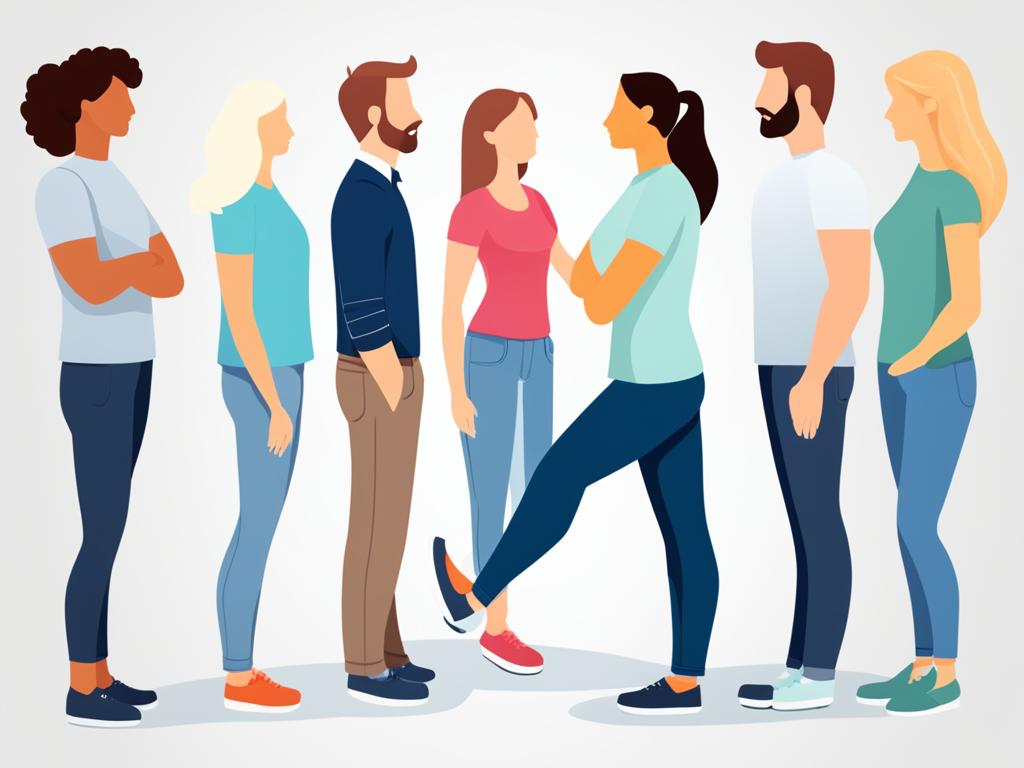
Setting and respecting boundaries is crucial for maintaining healthy relationships. It involves not just defining our own limits but also acknowledging those of others. Key to this are empathy, emotional intelligence, and clear communication. These elements help us respect the personal space and preferences of those around us.
Avoiding Violation of Others' Boundaries
Respecting others' boundaries is vital for preserving trust and the integrity of relationships. It's essential to be aware of the following when interacting with others:
- Recognize different types of boundaries, such as physical, sexual, emotional, mental, and time-related boundaries.
- Understand that healthy boundaries are flexible and porous in intimate relationships, but may be firmer with those lacking boundaries or in the outside world.
- If you inadvertently cross someone's boundaries, apologize promptly and commit to doing better next time.
- In romantic relationships, respecting each other's boundaries is essential to avoid stress, discomfort, and resentment.
Respecting our own and others' boundaries requires self-awareness, clear communication, and a commitment to address any violations. By doing so, we build trust and intimacy through mutual respect. This creates a safe and supportive environment that promotes mental health and fosters healthy relationships.
| Boundary Type | Description |
|---|---|
| Physical | Limits around personal space, touch, and physical interactions |
| Emotional | Boundaries around feelings, vulnerabilities, and emotional intimacy |
| Mental | Limits on intellectual and cognitive engagement |
| Time | Boundaries around availability, schedules, and personal time |
"Boundaries are the distance at which I can love you and me simultaneously." - Prentis Hemphill
Respecting others' boundaries showcases our emotional intelligence, empathy, and dedication to healthy relationships. This approach builds a foundation of trust, understanding, and mutual support.
Establishing Boundaries in Daily Life
Setting healthy boundaries is essential for a balanced life, self-care, and overall well-being. It involves defining limits on work hours, communication, and personal time. This prevents burnout and helps focus on what's important. A mental health counselor notes that rigid boundaries can cause relationship issues, while overly flexible ones may lead to imbalance or exploitation.
Research shows that expecting to be available for work emails outside work hours can negatively impact well-being and relationships. To address this, a professional counselor recommends setting situational boundaries. This approach helps maintain energy for self-care.
Boundaries are not set in stone and can change with relationships and personal growth. A family therapist emphasizes their importance in conserving emotional energy and preventing resentment. Healthy boundaries protect our relationships and boost self-esteem.
| Benefits of Establishing Boundaries | Percentage of Respondents |
|---|---|
| Ease pressure and reduce daily decisions | 62% |
| Focus on priorities and avoid distractions | 78% |
| Reduced stress in decision-making | 85% |
| Healthy work-life balance | 70% |
| Overall well-being | 42% |
| Mental and physical health | 56% |
Creating boundaries in daily life requires effort but offers significant benefits. A mental health counselor suggests saying 'no' clearly without elaborate explanations. This approach helps prioritize self-care, career goals, and relationships.
Respecting others' boundaries is as crucial as asserting our own. Doing so builds a foundation of trust and understanding. This leads to healthier relationships and a more harmonious life.
Boundaries and Self-Care
Healthy boundaries are crucial for effective self-care. They help us manage our time, energy, and personal needs. This ensures we prioritize our well-being and avoid burnout. By setting these limits, we achieve a better work-life balance, reduce stress, and meet our physical, emotional, and mental needs.
Research indicates that women often criticize themselves eight times daily. The rise in burnout highlights the urgent need for self-care. While setting boundaries may lead to guilt or disappointment, it's vital for our emotional health.
Those in junior roles, caregivers, or marginalized groups struggle to set boundaries. Without them, they may overexert themselves, leading to health problems. The reluctance to say "no" often stems from a desire to be seen as a hero or always available.
Organizations and culture can help prevent burnout, but individuals must also take action. By practicing self-care and setting boundaries, we can take back our time, energy, and emotional well-being.
The PsychCentral article provides 10 tips for creating healthy boundaries. Their guide on saying "No" highlights its power. Many find relief and self-awareness through meditation. Books offer insights and strategies for setting boundaries and prioritizing self-care.
| Technique | Impact |
|---|---|
| Joining support groups to learn about healthy boundary setting | Increased understanding and confidence in setting boundaries |
| Practicing meditation for relaxation and self-awareness | Improved mental well-being and ability to enforce personal limits |
| Reading books on self-care and boundary setting | Gaining practical insights and strategies for prioritizing personal needs |
By embracing self-care and setting healthy boundaries, we can reclaim our time, energy, and emotional well-being. This leads to a more fulfilling and balanced life.
Building Healthy Relationships Through Boundaries
Setting and maintaining healthy boundaries is crucial for forming meaningful relationships. It involves clearly expressing our limits and needs, and honoring others' boundaries. This approach builds trust, respect, and understanding. Healthy boundaries let us be our true selves, leading to deeper connections.
Research by Brené Brown, PhD, highlights that healthy boundaries mean knowing what you're okay with and what you're not. These boundaries are vital for balance, respect, and overall well-being in relationships.
Healthy boundaries in relationships clarify how we interact with each other. They foster respectful, trusting, and safe exchanges. This allows for open sharing and the ability to say no, preventing exploitation.
Boundaries lead to respectful, two-way conversations instead of arguments. They prevent resentment, burnout, and anxiety by setting limits on what one can handle.
Boundaries are relevant across all relationships, from friends to romantic partners. In romantic relationships, they define acceptable behavior and expectations. They promote mutual respect, protection, and support.
Setting boundaries requires open, honest talks about what each person expects. This ensures a safe space and avoids misunderstandings or controlling behaviors. Regular discussions about feelings and sensitive topics help maintain these boundaries.
"Healthy boundaries can help build respectful, trusting, and safe interactions where individuals feel comfortable sharing openly and saying no."
It's okay to ask for personal space or time alone to preserve well-being in a relationship. Boundaries can change due to life events like having children, showing their dynamic nature.
| Healthy Relationship Boundaries | Unhealthy Relationship Boundaries |
|---|
- Clear communication of limits and needs
- Mutual respect and understanding
- Fostering trust and safety
- Allowing for individual well-being
- Adaptable to life changes
- Controlling and restrictive
- Lack of open communication
- Disrespect and violation of personal space
- Impeding individual growth and self-care
- Rigidity and inflexibility
By setting and keeping healthy boundaries, we lay the groundwork for relationships that are fulfilling, respectful, and emotionally intelligent. These relationships support our growth and well-being as individuals and partners.
Conclusion
Setting healthy boundaries is crucial for empowering our lives and relationships. It involves defining our limits, communicating them clearly, and respecting others' boundaries. This practice enhances self-respect, inner safety, and fosters authentic connections. It's a journey of self-discovery and personal growth, offering immense rewards like better well-being, stronger relationships, and the freedom to live life as we choose.
Setting boundaries can be challenging, as it requires overcoming feelings of guilt, fear, and the potential for relationship losses. Yet, research shows that those who set and maintain healthy boundaries enjoy higher self-esteem, less stress, and improved overall well-being. Moreover, clear boundaries in the workplace can boost productivity and job satisfaction, underscoring the broad advantages of this vital skill.
As we navigate the complexities of our lives and relationships, it's essential to recognize that setting and respecting boundaries is crucial. It's not just a personal matter but a key practice for a balanced, fulfilling, and empowered life. By embracing the power of boundaries, we gain the freedom to be our true selves, build meaningful connections, and live life on our own terms.
Source Links
- Setting Healthy Boundaries in Relationships - HelpGuide.org - https://www.helpguide.org/articles/relationships-communication/setting-healthy-boundaries-in-relationships.htm
- Setting Boundaries - https://www.webmd.com/mental-health/setting-boundaries
- How To Set Healthy Boundaries In Relationships - https://health.clevelandclinic.org/how-to-set-boundaries
- Council Post: The Importance Of Setting Healthy Boundaries - https://www.forbes.com/sites/forbescoachescouncil/2021/07/01/the-importance-of-setting-healthy-boundaries/
- A Guide to Setting Better Boundaries - https://hbr.org/2022/04/a-guide-to-setting-better-boundaries
- Why Is It Important to Have Personal Boundaries? - https://www.psychologytoday.com/us/blog/how-help-friend/201711/why-is-it-important-have-personal-boundaries
- Setting Limits: Boundaries and Attachment Styles - AP - https://www.attachmentproject.com/blog/boundaries-and-attachment-styles/
- How Does Attachment Style Impact Your Ability To Set Boundaries? - claritytherapynyc.com - https://www.claritytherapynyc.com/how-does-your-attachment-style-impact-boundaries/
- Parents Need Boundaries, Too by Carrie Kerr - https://www.attachmentparenting.org/support/articles/boundaries
- How to Set Healthy Boundaries with Ease and Confidence - https://www.theheartyfig.com/blog/set-healthy-boundaries
- A Guide to Healthy Self-Esteem and Setting Boundaries. - https://medium.com/@doctorbecky/a-guide-to-healthy-self-esteem-and-setting-boundaries-c5f066ef0b42
- The boundary paradox - https://www.integral-presence.com/tools/healthy-boundaries/
- A Fair Fight: Healthy Conflict Creates Healthy Boundaries - Martha Beck - https://marthabeck.com/2011/12/a-fair-fight-healthy-conflict-creates-healthy-boundaries/
- The Paradox of Boundaries and Radical Acceptance - https://medium.com/the-virago/the-paradox-of-boundaries-and-radical-acceptance-61ec5d5caaf7
- Setting Boundaries is Essential to your Empowerment - https://www.bethanywebster.com/blog/setting-boundaries-is-essential-to-your-empowerment/
- Acceptance and Commitment Therapy and Contextual Behavioral Science: Examining the Progress of a Distinctive Model of Behavioral and Cognitive Therapy - https://www.ncbi.nlm.nih.gov/pmc/articles/PMC3635495/
- The Art of Saying No: A Crucial Skill for Managers - https://medium.com/from-silicon-to-stories-matts-moments/the-art-of-saying-no-a-crucial-skill-for-managers-e2bd8bec6d0e
- How to Say No & Master the Art of Personal Freedom - https://positivepsychology.com/how-to-say-no/
- The Art Of Saying No: Setting Boundaries With Grace - https://byshree.com/blogs/news/the-art-of-saying-no-setting-boundaries-with-grace
- Strengthening Your Personal Sovereignty by Setting Boundaries - Joe Love - https://www.joeloveiw.com/blog/learning-set-personal-boundaries/
- Big, Beautiful Fence: On Boundaries & Sovereignty - Hiro Boga - https://hiroboga.com/blog/sovereignty-freedom/boundaries-and-sovereignty/
- Boundaries and Self-Worth – The Gatehouse - https://thegatehouse.org/boundaries-and-self-worth/
- Fostering Self-Worth: Empowering Through Boundaries - https://happinessclinic.substack.com/p/fostering-self-worth-empowering-through
- Getting Over My Good Girl Syndrome - https://ravishly.com/getting-over-my-good-girl-syndrome
- Breaking Free from the - https://www.thecentreforhealing.com/blog/the-good-girl-syndrome
- The “Good Girl†Syndrome - https://www.shellysharon.com/single-post/the-good-girl-syndrome
- Why men must have and enforce Boundaries — #DearNephew - https://medium.com/dear-nephew/why-men-must-have-and-enforce-boundaries-dearnephew-867de6bddcc
- How Tolerating the Disapproval of People Sets You Free - https://www.flyingfreenow.com/tolerate-the-disapproval-of-people-a-lesson-from-the-ladder-out-of-hell/
- Setting Healthy Boundaries as a Form of Self-Care - Rocky Mountain MS Center - https://mscenter.org/article/setting-healthy-boundaries-as-a-form-of-self-care/
- How is Life Tree(ting) You?: Trust, Safety, and Respect - The Importance of Boundaries - https://studentaffairs.stanford.edu/how-life-treeting-you-importance-of-boundaries
- How to Set Healthy Boundaries & Build Positive Relationships - https://positivepsychology.com/great-self-care-setting-healthy-boundaries/
- 9 Tips for Respecting Other People's Boundaries - https://psychcentral.com/relationships/how-to-respect-other-peoples-boundaries